Winding Stair Gardens

Why Native Plants for Western North Carolina and North Georgia Gardens

You’ve seen it before: a wild Flame Azalea blazing across a mountain slope in May, stopping you in your steps. That moment tells you everything. Native plants belong here. They’ve spent eons getting comfortable in the Southern Appalachians, adapting perfectly to our acidic soils, the hard frosts, the summer downpours.

Big-box garden centers don’t understand this. Their stock is grown far away, with no thought given to how a plant will hold up at 3,000 feet in Macon County, NC.

At Winding Stair Gardens, we’re a native plant nursery first. Native plants aren’t a marketing angle; they’re the backbone of what we do. For gardeners across Western North Carolina and North Georgia, the right native plant can be the difference between a garden that limps along and one that genuinely takes off.

Native Plants Thrive in Our Unique Conditions

Growing conditions here are not for the faint of heart. Elevations swing from around 1,500 feet in the valleys to over 5,000 feet in the high country, bringing real shifts in frost dates, rainfall, and temperature. Soils tend to run acidic and rocky. Some spots drain fast; others hold water for days after a good rain.

Native plants know this. Mountain Laurel, Rhododendron, Wild Bergamot, Eastern Redbud… these species have been sorting themselves out in our region for a million years. They don’t just get by here, they thrive, and need far less human attention than non-native plants. That matters when you expect your mountain garden to look good year-round; and without constant maintenance!

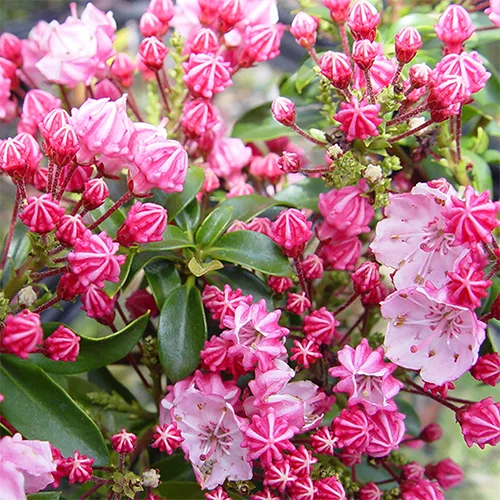
Mountain Laurel 'Little Linda'
Kalmia latifolia

Native Plants for Local Wildlife

Plant something that belongs here, and something wild will show up to say thank you. We rank among the most biodiverse regions in the world, outside of tropical rainforests. Your garden, no matter the size, can be part of that story.

Purple Coneflower, Black-eyed Susan, and Wild Bergamot pull in native bees, butterflies, and hummingbirds like nothing else; the foundation of any great pollinator garden. Serviceberry and Spicebush feed migratory songbirds moving through WNC and North Georgia each spring and fall. Native grasses and groundcovers support the insects that feed everything above them in the food chain. A garden full of native plants is a garden full of life.

Black-Eyed Susan
Rudbeckia fulgida
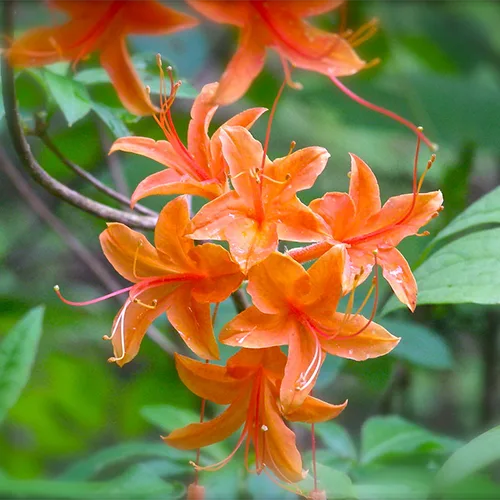
Flame Azalea
Rhododendron calendulaceum
Eastern Redbud
Cercis canadensis
Creeping Phlox
Phlox subulata
Rhododendron
Rhododendron catawbiense

Native Plants by Category

Not sure where to begin? Here’s a look at what we carry, all chosen with Western North Carolina and North Georgia growing conditions in mind.

Native Perennials: Come back stronger every year with very little help. Wild Columbine, Trillium, Spigelia, Black-eyed Susan, and Cardinal Flower are favorites for shady woodland spots and sunny borders alike.

Native Flowering Shrubs: A well-placed Flame Azalea or Mountain Laurel will stop foot traffic. Buttonbush, Virginia Sweetspire, Sweet Pepperbush and Oakleaf Hydrangea bring season-long color while doing real work for pollinators and birds.

Native Ferns: Deer-resistant and spread via rhizomes; perfect for shaded banks. Christmas Fern, Lady Fern, Cinnamon Fern, Hay-Scented Fern, Royal Fern and Northern Maidenhair Fern are all strong choices. 

Native Flowering Trees: Eastern Redbud, Serviceberry, and Sourwood are standouts for mountain landscapes — beautiful through the seasons and deeply suited to our region’s soil and weather.

Native Blueberries: Both the Rabbiteye Blueberry and the Highbush Blueberry have year-round visual interest. Harvest the delicious fruit in spring and summer, and enjoy fiery red & orange leaves in fall. 

Native Ground Covers: Wild Ginger, Green and Gold, Creeping Phlox, Bearberry, and Bunchberry handle slopes, streambanks, and shady patches where grass gives up. Low-maintenance and genuinely good-looking.

Native Pollinator Plants: Monarda, Ironweed, Joe Pye Weed, Echinacea and native Milkweed varieties are your go-to options for supporting bees, butterflies, and hummingbirds. Hard to go wrong with any of them.

Native Vines: For fences, trellises, arbors, and natural areas where you want vertical interest without the work. Coral Honeysuckle, Dutchman’s Pipe, Clematis and Passionflower feed local pollinators and look great on any vertical plane.  

Native Plants for Specific Situations

The question we hear most often is some version of “what will actually grow in my yard?” For nearly every tricky situation in a WNC or North Georgia garden, there’s a native plant that fits.

Shade Gardens: Trillium, Wild Ginger, Foamflower, Goat’s Beard, and Solomon’s Seal are completely at home under oaks or hemlocks.

Deer-Resistant Plants: Spirea, Coreopsis (Tickseed), and Blue Star Bearberry tend to get left alone. No plant is deer-proof, but these are strong, reliable choices.

Dry Slopes and Rocky Soils: Creeping Phlox, Butterfly Weed, and Little Bluestem grass are at their best in the fast-draining, rocky soils common across our region.

Rain Gardens and Wet Areas: Cardinal Flower, Swamp Rose Mallow, Buttonbush, and native Sedges are happy with wet feet. Put them to work.

Streambank Restoration: Silky Dogwood, Red Maples, Red Twig Dogwood, Tag Alder, and native Willows and Birches establish fast and hold banks the way non-natives simply can’t. 

Common Mistakes When Planting Native Plants

 Planting at the Wrong Time: Spring and fall are the best windows in WNC and North Georgia. Fall planting deserves more credit than it gets.

Overwatering: The most common mistake. Water regularly during the first season, then step back and let the plant do what it knows how to do.

Expecting Instant Results: The native plant adage is first they sleep, then they creep, then they leap. Year one the plant is quiet. Year two you see growth. Year three it takes off. Give it time.

Wrong Plant, Wrong Place: A sun-lover in deep shade will struggle no matter how well-suited it is to our region. Matching plant to conditions is half the battle — we help you work that out. It’s important to know your garden, light conditions and soil needs. If you already have native plants, look at where they are growing and use that as your guide.

Skipping the Mulch: Holds moisture, moderates soil temperature, and keeps weeds down during that first season. Simple step, big difference.

Rivette & Amanda
our favorite native plant fans

Why Buy Native Plants Locally

There’s real value in buying from people who grow in the same mountains you do. Winding Stair Gardens isn’t just a place to shop- we’re your neighbors. We know what a late April frost does to a garden here, and how the elevation difference between Clayton and Cashiers changes what you can realistically grow.

Shopping local for native plants means getting stock plants sourced with our regional conditions in mind, along with guidance a big-box store simply can’t provide. If you’re looking for a native plant nursery near Franklin, NC, Highlands, Sylva, Clayton, or anywhere across the Southern Appalachians, we’d love to meet you.

Stop in and let’s talk plants. You’ll love your visit to Winding Stair!

Winding Stair Gardens is Western North Carolina’s native plant nursery, located at 57 Saunders Road in Franklin, NC.